Living in a small apartment bedroom doesn’t mean settling for a cramped, cluttered space. The right combination of storage, furniture placement, and design choices can transform even the tightest bedroom into a functional sanctuary that actually feels larger. Whether you’re dealing with 80 square feet or 120, the key is working smarter, not fighting your square footage. This guide walks through practical strategies that builders, designers, and seasoned DIYers use to maximize small bedrooms without breaking the budget or sacrificing personal style.
Table of Contents
ToggleKey Takeaways
- Strategic storage solutions like under-bed drawers, vertical shelving, and closet organizers transform small apartment bedroom clutter into hidden functionality.
- Furniture placement focused on sight lines and open walkways—such as pushing the bed against the longest wall—creates the illusion of a larger space without sacrificing usability.
- Layered lighting with multiple sources and cool white bulbs (4000K) at proper color temperature make small bedrooms feel more spacious and less shadowed.
- Light, neutral wall colors and monochromatic color schemes help walls recede, while a single accent wall adds personality without overwhelming a tight room.
- Multi-functional furniture pieces like beds with built-in drawers, wall-mounted desks, and ottomans with hidden storage maximize every square foot of your small apartment bedroom.
- Vertical décor strategies including floor-to-ceiling curtain rods, floating shelves with minimal styling, and vertical wall patterns draw the eye upward and enhance perceived height.
Smart Storage Solutions That Hide Clutter
A small bedroom fails the moment clutter takes over. The solution isn’t buying more furniture, it’s using vertical space and hidden storage strategically.
Under-bed storage is the lowest-hanging fruit. Standard bed frames sit 12 to 18 inches off the floor: use that cavity for rolling drawers, flat boxes, or vacuum bags. Label everything so you’re not digging blind when you need something. Shelf units above the window or along one wall cost far less than adding a dresser and pull the eye upward, essential in tight rooms.
Closet organization makes the difference between looking neat and feeling suffocated. Hang a tension rod for double-hanging, add shelf dividers to prevent stacks from tipping, and use clear storage bins on higher shelves so you know what’s up there without opening them. Over-door shoe organizers, slim hooks, and slim hangers (not chunky wood ones) reclaim surprising inches.
Corner shelving and floating shelves above a desk or dresser break up wall space without bulk. Wall-mounted cabinets with doors hide what you don’t want to see while displaying what you do. Many DIYers find that IKEA Hackers offers clever modifications and budget-friendly storage builds that adapt mass-market pieces to custom layouts. The trick is choosing closed storage for daily items and open shelving only for things you actually enjoy looking at.
Furniture Arrangement For Maximum Flow
Furniture placement in a small bedroom isn’t about symmetry, it’s about opening sight lines and creating a path through the room.
Push the bed against the longest wall and leave the opposite side open. A bed floating in the center of the room chokes the space. Keep nightstands minimal (a wall shelf works in a pinch) and store one on the side nearest the door to avoid bumping your shins in the dark. Avoid placing a dresser opposite the bed if it blocks a natural walking path: tuck it into a corner instead.
Measure before you buy. Even a twin-size bed frame takes up real estate, and a full queen is a commitment. If the room is under 100 square feet, consider a platform bed with integrated storage drawers underneath, you’re not losing functionality, you’re just combining uses. Many small-space dwellers discover that Young House Love shares DIY furniture projects and room layouts that squeeze function into tight footprints without looking cramped.
Leave walkways clear and keep the center of the room open for visual flow. Avoid pushing every piece of furniture against walls, it often makes a room feel like a maze. Angle a chair in a corner if you have space, but always preserve sightlines from the door across the room. This simple rule tricks the brain into perceiving more space.
Lighting Tricks To Expand Visual Space
Lighting is invisible architecture. A dark corner or dim bedroom shrinks visually: good lighting opens it up.
Layered lighting prevents harsh shadows. Use a ceiling fixture for base light, add a desk lamp or bedside reading light for task work, and throw in a wall sconce or strip lighting behind a floating shelf for ambient glow. Avoid relying on a single overhead fixture, it casts shadows that emphasize tight walls.
Color temperature matters more than brightness. Warm white bulbs (2700K) feel cozy but can close a space in. Cool white (4000K) mimics daylight and makes rooms feel more expansive without feeling cold or clinical. Test before committing, many hardware stores now sell adjustable smart bulbs so you can shift between warm and cool depending on the time of day.
Mirrors are free space. A large mirror opposite a window bounces daylight around the room: a mirrored wall section expands sightlines without adding square footage. Avoid placing mirrors directly across the bed if it disturbs sleep, but a mirror on a closet door or beside a small desk works perfectly. Metallic accents (a brass lamp base, framed metal shelving) catch light and add depth without clutter.
Color Palettes That Make Rooms Feel Larger
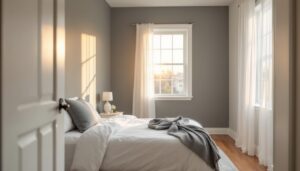
Wall color sets the tone for perceived space. Light, neutral tones (warm white, soft gray, pale sage) make walls recede. Dark colors advance and close a space, so avoid charcoal or navy if the room is already small, save those for accent walls or trim.
Monochromatic schemes (one color family, varying in lightness) are the secret weapon. Paint walls in a soft gray, bedding in a slightly deeper gray, and curtains in pale gray-white. The eye doesn’t stop, it flows naturally, and the room feels unified and larger. Avoid high-contrast combinations (dark wall with bright white trim) in a tight space: they chop the room into smaller pieces.
Accent color works in small doses. A single accent wall of muted blue or green behind the bed creates focus without overwhelming. Keep other walls and trim neutral so the eye isn’t darting around. Many designers and DIY creators at Apartment Therapy showcase color palettes for small spaces that balance personality with the openness a tight room demands.
Floor color influences perceived space too. Light wood or light-toned flooring (or light area rugs) feels more spacious than dark. If you have dark hardwood, layer a light-toned rug near the bed to brighten the visual center of the room. Stick to two or three colors total (walls, one accent, floor/rug) to avoid visual noise.
Multi-Functional Furniture Pieces That Earn Their Space
In a small bedroom, every piece must pull double duty. A dresser with a mirror is smarter than a separate dresser and wall mirror. A bed with built-in drawers eliminates the need for a separate chest. An ottoman with hidden storage serves as a seat, footrest, and storage bin simultaneously.
Wall-mounted desks fold down or swing up when not in use, giving you workspace without permanently consuming floor area. Headboards with shelving add function without extra footprint. A narrow bookcase at the foot of the bed provides storage and defines the space without blocking sightlines if kept to waist height.
When shopping, prioritize pieces with open bases (legs on a nightstand, not a full bottom panel) because they don’t block sightlines and make the room feel less heavy. Transparent furniture (glass, acrylic, metal frames) adds function without visual bulk. A clear acrylic nightstand holds a lamp and alarm clock without seeming to take up space.
Avoid buying “just in case” furniture. A small bedroom fills up fast. Every piece should solve a real problem. If you don’t use it weekly or it doesn’t make the room function better, it’s taking up space.
Wall Treatments And Vertical Décor Strategies
Walls in a small room are your best real estate, treat them like storage and décor zones, not just boundaries.
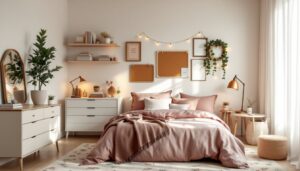
Floating shelves above a desk, alongside a window, or framing a headboard add character and utility. Keep styling minimal: a plant, a few books, a framed photo. Overstuffed shelves feel chaotic in tight spaces. One well-styled shelf with breathing room beats three packed shelves.
Wallpaper with vertical patterns (stripes, vertical geometric patterns) tricks the eye into seeing height. Horizontal patterns can shrink a room vertically, so avoid them in bedrooms with low ceilings. If wallpaper intimidates you, large-scale vinyl wall decals or removable wall murals (available at most home improvement stores) add personality without permanent commitment.
Curtains affect space perception too. Floor-to-ceiling rods (even if your window doesn’t extend that high) visually elongate walls. Light, sheer curtains filter light without blocking it: heavier drapes absorb light and can make a room feel closed. Hang rods near the ceiling, not at window height, to draw the eye upward.
Use the wall above the bed wisely. A large piece of art or a floating shelf with three or four small frames creates a focal point without clutter. Avoid a gallery wall of 10+ frames in a small room, it fragments the wall and makes the space feel busy. Simple and intentional beats maximalist in tight quarters.
Conclusion
A small apartment bedroom thrives on intentionality, not sacrifice. Smart storage, strategic furniture placement, thoughtful lighting, a neutral palette with one accent color, and multi-functional pieces transform 80 square feet into a space that feels both calm and fully functional. Start with one or two changes, better storage and furniture arrangement, before repainting or buying new pieces. Most small-space wins come from working with what fits, not from what’s trendy.