A split bedroom layout, where one large room is divided into two separate sleeping or living zones, solves a real problem for growing families, roommates, and space-conscious homeowners. Whether you’re fitting two kids into one room, creating a guest area without sacrificing your master suite, or maximizing a studio apartment, a smart split bedroom setup delivers privacy and functionality without requiring walls or a contractor’s invoice. The key is thoughtful planning: choosing the right dividers, arranging furniture strategically, and using color and lighting to make each zone feel complete. This guide walks through practical split bedroom ideas and techniques you can carry out yourself.
Table of Contents
ToggleKey Takeaways
- Split bedroom ideas allow you to divide one large room into two functional zones using furniture, dividers, or architectural tricks without permanent construction or contractor costs.
- Visual and acoustic dividers—such as floor-to-ceiling curtains, bookcases, or fabric screens—are essential for creating distinct, private spaces within a split bedroom layout.
- Strategic furniture placement, including diagonal arrangement and back-to-back positioning, maximizes floor space while clearly defining each zone’s boundaries and improving traffic flow.
- Dedicated lighting and complementary accent colors on opposite walls transform a split bedroom into two psychologically separate spaces that feel intentional rather than cramped.
- Vertical storage solutions like wall-mounted shelves, under-bed bins, and dual-purpose furniture are non-negotiable to prevent clutter overflow and maintain the separation between zones.
- Rooms under 100 square feet feel cramped when split; aim for 150+ square feet to create genuinely functional, livable zones with realistic privacy and noise expectations.
What Is a Split Bedroom Layout?
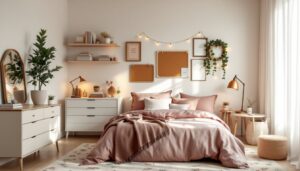
A split bedroom is simply one room divided into two functional zones using furniture, dividers, or architectural tricks. Unlike actual wall construction, which requires framing, drywall, permits, and professional labor, a split bedroom is often temporary or semi-permanent. You might split a master bedroom into a sleeping area and a home office. You could divide a large guest room so siblings each have their own territory. Or, in a studio or open-plan apartment, you create a sleeping nook separate from living and work zones.
The beauty of this approach is flexibility. If your needs change, you dismantle the setup and reconfigure. No drywall dust, no structural work, and no building department paperwork. That said, success depends on thoughtful placement, visual separation, and enough square footage to genuinely create two distinct spaces, a 10-by-10 room divided in half leaves each side cramped, while a 12-by-14 or larger room offers real potential.
Privacy Dividers and Room Separation Techniques
The divider is your most important tool. It creates visual and acoustic separation, defines boundaries, and signals to occupants that each zone is independent.
Permanent or semi-permanent dividers work best if you own and plan to stay put. A full-height bookshelf (36 to 84 inches tall) doubles as storage and a solid visual barrier. For under $200 to $400, you can source an unfinished wood or metal bookshelf, paint it, and secure it to wall studs for stability. A sliding barn door mounted on a ceiling-mounted track costs $300 to $600 installed and offers adjustable privacy, slide it closed for full separation, or leave it open for airflow. Glass partitions with frosted panels ($400–$800) provide visual separation while maintaining light flow: they’re popular in modern studios and require careful measurement and installation.
For renters or those hesitant about permanent installation, there’s plenty of flexibility.
Temporary Divider Options for Renters
A fabric room divider or folding screen ($50–$150) is the quickest solution. Look for models with solid wood frames and heavy linen or polyester panels: cheaper plastic-framed versions wobble. Place it perpendicular to the wall to form an L-shape and define one zone. For more acoustic control, hang a tension rod and floor-to-ceiling curtain panels ($80–$200) in blackout or heavy cotton fabric. Mount the rod at the ceiling using adjustable tension rods or, if allowed, a small hardware installation into studs. This blocks light and muffles sound better than a freestanding divider.
Other temporary options include hanging plants or macramé wall hangings to visually delineate space, or arranging tall shelving units perpendicular to the room to block sightlines. The key: whatever you choose must be stable enough not to tip, especially if children are in the space. Test it before leaving it unsupervised.
Furniture Arrangement Strategies
How you position beds, desks, and dressers determines whether each zone feels distinct or cramped. Diagonal placement (angling a bed corner toward the room’s corner rather than flush against the wall) adds visual interest and helps define a zone’s perimeter. If one person sleeps and the other works, place the bed on one side of the divider and the desk on the other, positioning each toward its own zone’s “entry point.”
Back-to-back furniture is a space-saver and natural boundary. Two single beds placed back-to-back (head to head, mattresses facing outward) create a dual-purpose divider and save 12 to 18 inches of floor space compared to parallel beds. Use the space behind as storage or a narrow corridor. Similarly, a desk and small dresser arranged back-to-back create a mid-room partition with built-in storage.
Keep zones balanced. If one side has a full-size bed and the other has a small desk, the room feels unequal. Distribute furniture height and visual weight evenly. MyDomaine offers room-by-room design inspiration that shows how proportional placement creates cohesion even in split layouts.
Traffic flow matters. Avoid blocking natural entry points with large furniture. If the door opens on the left, position the divider or heavy furniture on the right to leave a clear path. Cramped pathways feel claustrophobic and invite accidents (especially with kids bumping into corners in dim light).
Use vertical storage, tall narrow bookcases, wall-mounted shelves, and over-door organizers, to maximize usable floor space. This leaves the center of each zone open and airier.
Color and Lighting for Distinct Zones
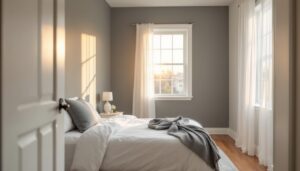
Paint and light transform two halves of a room into two distinct spaces psychologically. Use two accent colors rather than painting one half bright blue and the other mint green: that’s jarring. Instead, pick a neutral base (soft gray, warm white, or pale taupe) for 80% of the wall area, then pick two complementary accent colors, perhaps dusty sage and warm terracotta, or soft gray-blue and muted ochre. Paint accent walls on opposite sides of the divider, or paint the divider itself in one accent color to anchor each zone’s identity.
Lighting does heavy lifting in split bedrooms. A single overhead fixture casts uniform light across the whole room and erases zone separation. Instead, install dedicated lighting for each zone: a pendant light or flush-mount fixture (or a plug-in fixture on a dimmer circuit) for the sleeping side, and a focused desk lamp or wall sconce for the work area. This isn’t a wiring job, battery-powered LED strips ($20–$50) with remote controls, plug-in pendant lights ($30–$80), and clip-on lamps ($15–$40) all work.
Apartment Therapy covers small space living ideas that highlight how layered lighting and color separation make shared spaces feel intentional. Overhead, task, and accent lighting together create zones that work around the clock.
Storage Solutions to Maximize Split Bedroom Space
Storage is non-negotiable in a split bedroom. Clutter in one zone visually invades the other. Under-bed storage boxes (low-profile plastic or wood bins that slide beneath, roughly 12 inches tall and 20 inches wide) hold off-season clothes, books, or toys out of sight. A full-size bed with built-in drawers ($400–$800) pays for itself in reclaimed floor space.
Wall-mounted shelving (floating shelves, ladder shelves, or ladder-style bookcases) keeps items vertical and visible without eating floor area. A 24-inch-deep, 60-inch-wide shelving unit mounted 18 inches above a desk holds decor, books, and office supplies within arm’s reach.
Dual-purpose furniture saves space: an ottoman with hidden storage, a bed frame with shelving cubbies built into the headboard, or a bookcase that doubles as the divider itself. Decoist showcases modern interior design and home decor inspiration that demonstrates how strategic storage makes tight layouts livable.
Label storage clearly. If two people share, each gets designated bins or shelves so there’s no confusion about whose item lives where. Neutral storage bins ($5–$15 each) in gray, black, or white let each zone customize their side with different colors or décor without the bins clashing.
Conclusion
A split bedroom works when the layout, divider, furniture, color, and lighting all reinforce the sense of two separate spaces. Start by measuring your room carefully and sketching two or three layout options before you buy anything. Test your divider choice with a borrowed version or purchase a returnable option. Invest in good lighting and storage early, both pay dividends in livability. If your room is under 100 square feet, split layouts feel cramped: above 150 square feet, you have real flexibility. Be honest about noise and privacy limits: a heavy curtain won’t muffle a snorer or eliminate light bleed from an adjoining sleeper’s late-night reading. With planning and realistic expectations, a well-executed split bedroom idea transforms one room into two functional, visually distinct zones.